Hurry Up and Wait

Lately, I’ve been investigating patience, specifically- my lack of it.
This week has been a windfall of opportunities to notice my own impatience. I’ve noticed I feel impatient when:
I’m ‘waiting’ for something. Standing in lines. Stuck in traffic. Queuing at the grocery store. More broadly I might be waiting for a vacation, the end of my work day, the seeds to come up in the garden.
Someone behaves in a way that isn’t ideal for me. From the person who cut me off in traffic, to current political leaders.
Something happens I don’t expect. Even the weather can fall into this category. Rain! That’s not what my weather app said.
Yesterday, I even noticed a tree that that usually flowers this time of year. I actually stood beneath it looking up at the closed buds, frustrated they hadn’t started open yet. Logically, I know that this is ridiculous. Trees have never bloomed at my whim. And yet. . . the feeling was there.
I become impatient when I expect the world to be other than it is.
Where does this pattern come from? Why do I get irritated when the world doesn’t line up to my idea of the way it should be?
I found a surprising answer later that day. I was biking and I got stuck behind a ‘bike bus’ AKA, a whole mob of kids biking together to school. The adults had signs on the back of their bikes ‘kids biking, do not pass’ The kids, were going slow. I turned off, and took a side street.
There was the impatience again. Just because kids on their bikes are slow.
All of the sudden I was hit with a wave of sadness, I couldn’t explain. I stopped and got off my bike. I remembered a single, ordinary moment from my childhood.
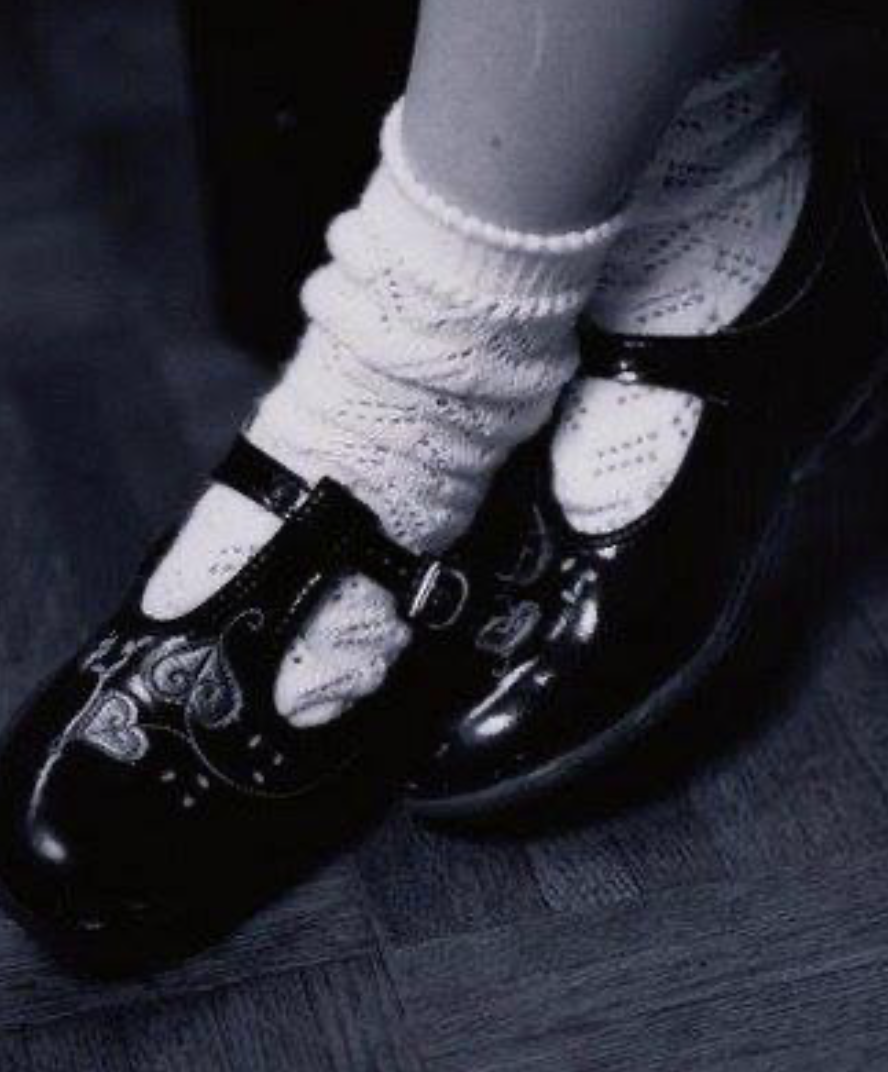
I was trying to put on my shoes before church.
They were patent leather shoes. The buckles were stiff and I couldn’t get them to close. My mom, who had four children at the time, asked me to ‘hurry up’. She was frustrated.
Usually, I was the one who was ready to go—because I was the oldest child. But this time I was holding things up.
I’ll pause here to say that this was a totally normal parent moment. My mom has always been great with children. If she occasionally lost her patience, that’s understandable, and I don’t fault her for that.
In that moment, struggling with my shoes I was frustrated too. Frustrated at myself- why couldn’t I put my shoes onfaster? I was mad at the shoe. Why was it such a bad shoe? With a better shoe I would have been ready to go and my mom would not be mad. I Frustrated with my mom for not understanding that I was doing the best I could.
Underneath the frustration, was sadness. Sadness because even if I wanted to, I could not be anything other than I was in that moment. I felt those feelings and then I stuffed them down.
Over time, and with many similar interactions with parents, teachers, neighbors. I internalized the expectation that I should be efficient- so as not to put other people out or upset them. It was good and considerate to be fast. It was bad and inconsiderate to be slow.
I also began to project this expectation onto others.
—Someone walking slowly across the street was being thoughtless. I myself, would never walk so slowly, if another person was waiting in their car- I would hurry up- to make things more ideal for them.
Sometimes the logic worked, but many times it did not. Like today in the coffee shop- when the Barista was obviously the only employee trying to fulfill a very long drink order and I still stood in line feeling impatient. Or when I got stuck behind a gaggle of kids biking to school.
We become impatient when we expect the world to be something other than it is.
This is a pattern that’s conditioned over time. So, how can we stop doing that?
1. Notice, but don’t judge your impatience.
Once you begin noticing a reactive state- like impatience, you’ll also notice that it’s not very rational. That’s enough to start with. Just notice how it feels without getting mad at yourself for having that feeling.
See if you can just notice the feeling without making yourself or anybody else wrong.
Because usually, your reactivity is not really about what’s happening now. It’s something you’ve been carrying around with you. The stuffed down frustration from all the times you didn’t meet someone’s expectations, or they didn’t meet yours.
2. Locate the charged energy in your body.
Standing in the coffee shop, I traced the sensation of impatience to a location-right beneath my heart. It felt tight, like a ball of tinfoil wadded up in a lump. I took a breath and I just kept noticing it. I noticed it wasn’t going away. But I didn’t struggle to ‘make it’ go away because that’s just pushing it back down again.
3. Relax and Release what you can.
Relaxing is the opposite of forcing something to change. Right there in the coffee shop, waiting for the barista, I gave myself permission to let go of and release whatever I was ready to. I relaxed the muscles in that part of my body and took some slow breaths.
At first, this might not be easy to do, especially when you have a pattern of pushing it back down or making yourself feel bad about it. But I gave it a try, and I felt a little better afterwards. I did not become a totally patient person today. But I became a slightly more patient one.
4. Repeat
Some charged energies take time to release, and it’s different for everyone. Life will continue to give you opportunities to do this, until you release it all. You’ll run into the people/events/ experiences that stimulate reactive states like impatience- and you’ll get a chance to practice relaxing and releasing again.
5. Notice your Growth
Then you’ll have a moment where something that normally made you irritated or impatient doesn’t anymore. Or you might see someone else get irritated waiting in line, while you stand there feeling more or less OK. And then, maybe in the same day you’ll hit your edge with something else that frustrates you. That’s your next opportunity to step up to bat.
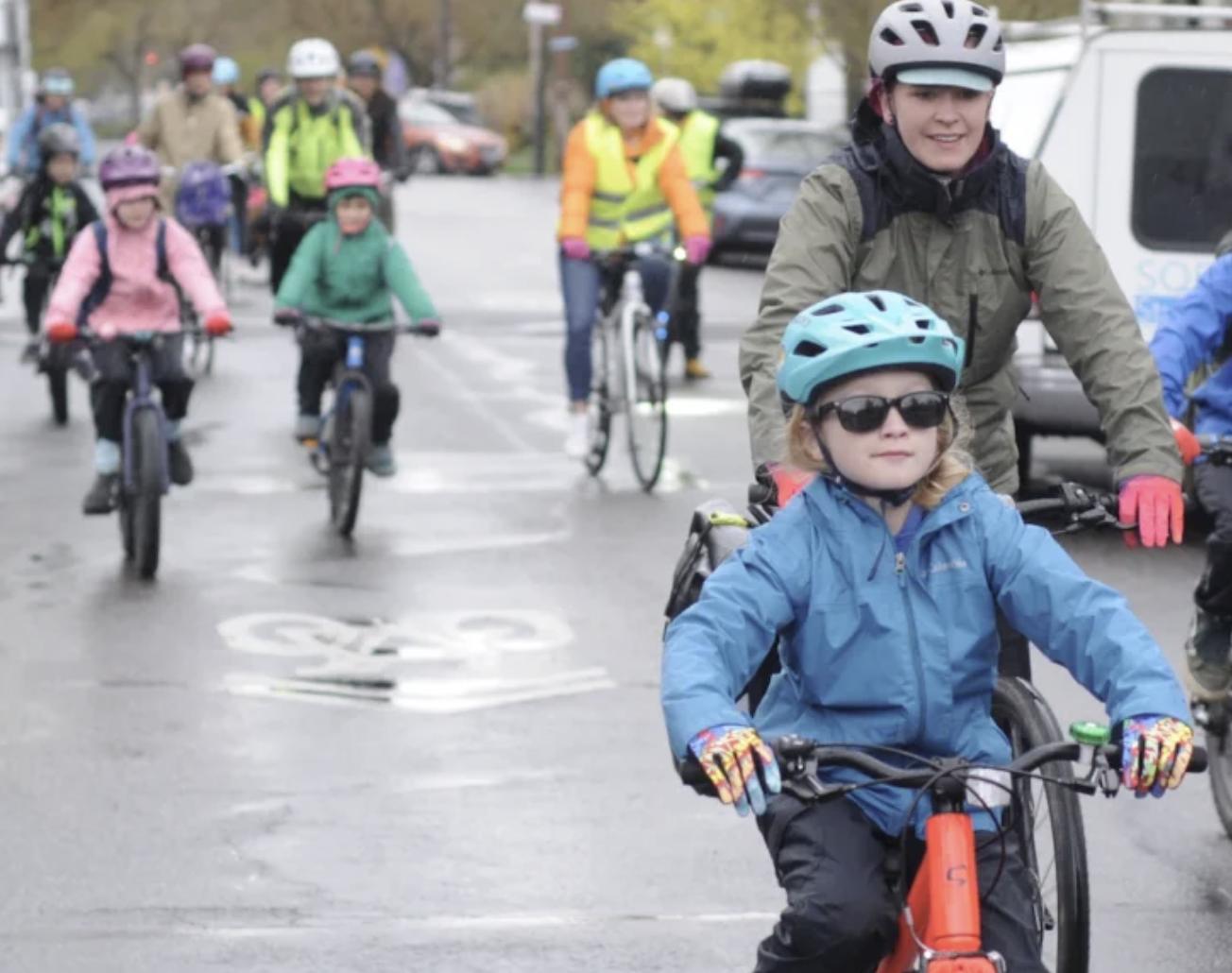
Today I was helped by: a barista, a linden tree and a group of kids biking to school.
I’m one step closer to growing into a person who accepts the world and the people in it as they are.
I’m not perfect. We’re not perfect. Wherever we are, that’s the place we’re growing and that’s the only place we can be.